
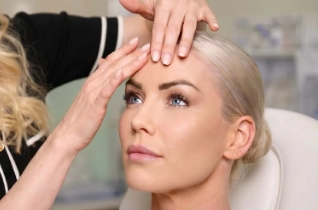
Although usually harmless, Seborrheic Keratosis can sometimes resemble other skin lesions, so they must be assessed by a skin cancer doctor before removal.
Laser Lesion Removal
Seborrheic Keratosis lesions are raised and dense, so they often require ablation (burning off). At Bella Plastic Surgery, we use medical-grade laser technology as a primary treatment method to ablate the lesion from the skin’s surface. During treatment, the laser targets the growth directly while causing minimal disruption to the surrounding tissue. Often, the lesion can be removed in a single treatment.
Seborrheic Keratosis can sometimes be removed by surgical excision; however, this will leave a scar, and the lesion’s size and location may limit removal. Alternatively, with laser technology, we can treat lesions of various sizes in various parts of the face or body. Markings can still occur after laser treatment, although they are often subtle and typically do not result in contour irregularities.
Skin Cancer Assessment
All patients must have a skin cancer assessment before laser removal. Due to the nature of lasers, the lesion is destroyed, so it cannot be sent to pathology for testing following treatment. All patients must have a skin cancer assessment before laser removal. Due to the nature of lasers, the lesion is destroyed, so it cannot be sent to pathology for testing following treatment.
How many treatments are required?
Often, Seborrheic Keratosis can be successfully removed in a single session. However, patients should be prepared to return to the clinic for a ‘touch-up’ appointment if required.
In cases with multiple or extensive lesions, areas may be treated in stages over consecutive appointments. This approach helps to minimise healing time while allowing us to assess your skin’s response before proceeding with more treatments.
Sometimes, we may recommend removing one lesion to assess the skin’s healing response before developing a treatment plan to address the remaining lesions.
Your skin during healing
Following laser removal, it’s normal for the area to be red, tender and swollen with some exudate (clear or yellow fluid). A scab will form over the treated area as it heals. The duration of the scabbing and the degree of information will depend on various factors, including the treated area and your individual healing response. These factors will be discussed with you during your consultation.
Comfort during Treatment
Our team will take various measures to help ensure your comfort during the procedure. When removing smaller lesions, a topical anaesthetic is usually adequate to maintain comfort. When removing larger lesions or treating larger areas, we may consider other options, such as administering a local anaesthetic with a small needle or providing nitrous oxide (happy gas) for greater comfort.
Aftercare
Following your treatment, you’ll be given verbal and written after-care instructions. Keep the area dry until the scab falls off on its own. Avoid sun exposure for at least six weeks. Your treating nurse will also discuss whether a topical cream or light-based therapy is recommended to support your healing.
Cost of Treatment
The cost of your laser removal treatment will depend on several factors, including the:
- size of the lesion/s
- number of lesions to be removed
- location of lesions
- time required to perform the removal
After your assessment, we can provide you with a price for your procedures.
Risks & Complications
All skin treatments, including laser lesion removal, carry risks. These can include changes in skin colour (light or dark), infection, slower healing, blistering and scarring (including raised scars).
Healing time can be influenced by the size of the removed lesion and the area from which it’s being removed. There is always an unknown quantity in the skin’s healing response, which is why all potential risks must be discussed and considered before proceeding with treatment.
